
ADGM KYC Requirements in 2027: What Businesses Should Know

ADGM KYC Requirements in 2027: What Businesses Should Know
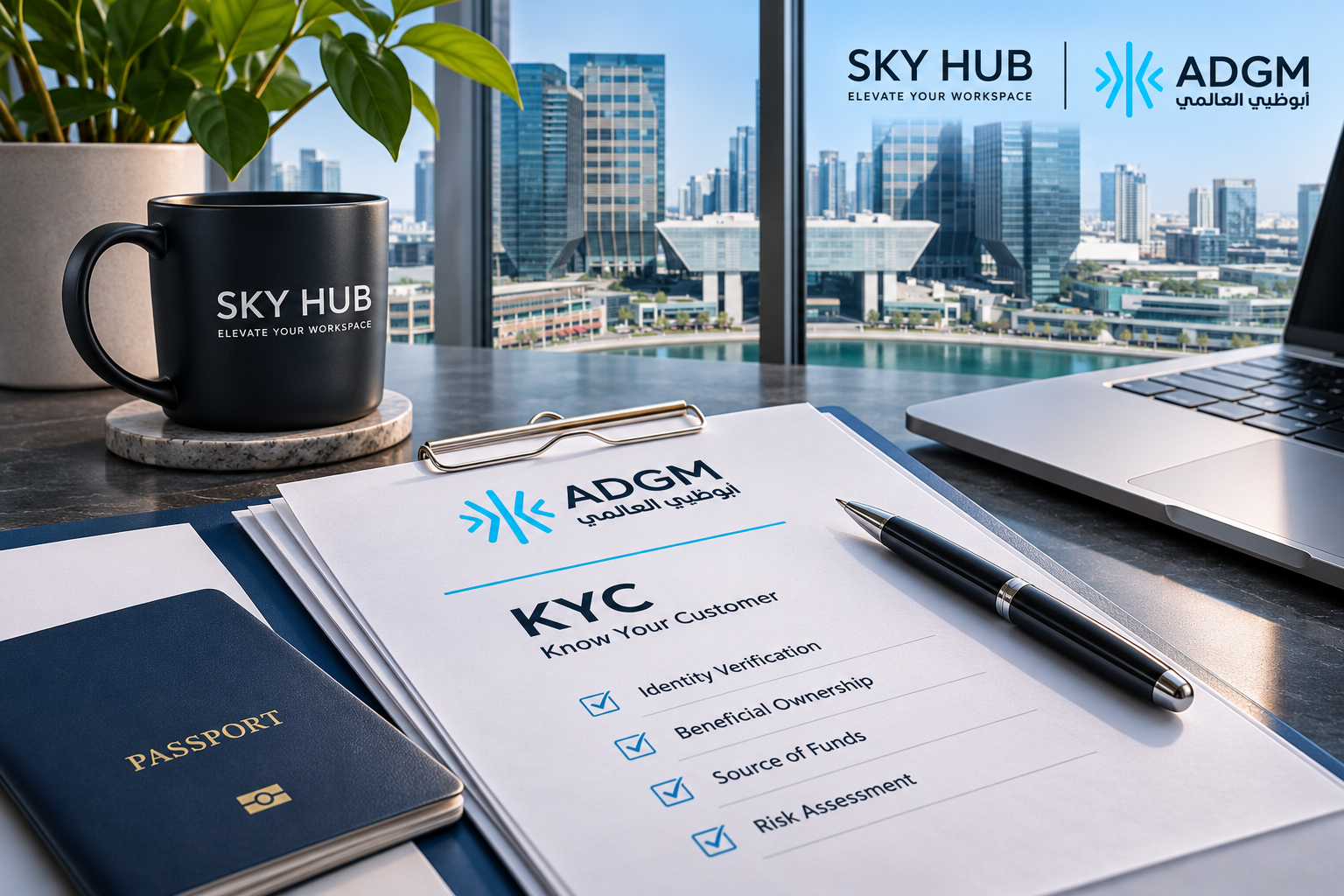
Running a business in Abu Dhabi Global Market (ADGM) comes with certain responsibilities, particularly when it comes to knowing who you are doing business with.
Over the past few years, the UAE has introduced important changes to its approach to financial crime prevention, corporate transparency, and regulatory compliance. These developments have also influenced the requirements businesses face within ADGM.
For many business owners, keeping up with these requirements is not always straightforward. Regulation changes, documentation requirements evolve, and what was sufficient a few years ago might no longer meet today’s expectations.
As we move towards 2027, it is worth taking a closer look at Know Your Customer (KYC) requirements, why they matter, and what businesses should be paying attention to.
What Does KYC Mean for Businesses in ADGM ?
Most business owners have come across KYC at some point, particularly when opening a corporate bank account, proceeding with ADGM company formation, or dealing with financial institutions.
The principle is fairly simple. Before entering into certain business relationships, organisations need to establish who their customers are and understand the nature of their activities.
In practice though, the process involves more than collecting a passport copy or trade license.
Depending on the business and its regulatory obligations, KYC might involve verifying the identity of individuals, reviewing company ownership, understanding where funds originate, and assessing whether a particular relationship presents additional risks.
Within ADGM, the Financial Services Regulatory Authority (FSRA) sets anti-money laundering requirements for firms within the scope of its AML Rulebook. The ADGM Registration Authority oversees separate obligations involving company registration, corporate records, and beneficial ownership.
This distinction matters because different types of businesses have different responsibilities.
A financial service company, for example, will generally have more extensive AML obligations than an ordinary commercial business. Corporate service providers also need to consider the specific requirements associated with their activities.
The starting point for any business should be understanding which rules apply to its operations.
Why Businesses Need to Think Beyond Basic KYC Checks
One of the most important aspects of ADGM’s AML framework is its risk-based approach.
Rather than applying identical checks to every customer, firms subject to the relevant requirements must consider the risks associated with each business relationship.
Take two companies as an example.
The first is a locally established business with a clear ownership structure, straightforward activities, and no significant international exposure.
The second operates in several countries, has multiple layers of corporate ownership, and conducts transactions involving jurisdictions considered to present higher financial crime risks.
Although both businesses require appropriate due diligence, the level of investigation will differ according to the risks identified.
The second company might require additional information about its shareholders, the nature of its transactions, or the source of its funds.
This approach allows businesses to focus their compliance efforts where they are needed most.
For business owners, the important point is to have a clear process for assessing risk and documenting the reasons behind compliance decisions.
Beneficial Ownership: Understanding Who Controls a Company
Beneficial ownership is another area receiving considerable regulatory attention.
When dealing with a company, knowing its registered name and shareholders is only part of the picture.
It is equally important to understand who ultimately owns or controls the business.
Sometimes this is straightforward. A company might have one shareholder who owns the entire business.
In other cases, ownership is spread across several individuals or companies, sometimes registered in different countries as well.
These arrangements require a closer look to identify the people who ultimately exercise ownership or control.
Under ADGM’s beneficial ownership framework, the identification process generally considers individuals who hold 25% or more of ownership or voting rights, alongside those who exercise control through other means.
ADGM has continued refining its beneficial ownership requirements, including changes introduced during 2026.
For business owners, this makes accurate corporate records particularly important.
If a company changes shareholders, restructures its ownership, or introduces new controlling individuals, its records need to reflect those changes.
Applicable entities must also notify the Registration Authority of relevant changes within the required timeframe.
Keeping ownership information current helps businesses meet their obligations and avoids unnecessary complications when dealing with banks, regulators, and other organisations.
Why KYC Is an Ongoing Responsibility
It is easy to think of KYC as something completed when a customer first signs up or a business relationship begins.
Documents are requested, information is checked, and the customer is approved.
The file is then stored away until someone asks for it again.
The difficulty with this approach is that businesses rarely remain unchanged.
A customer might appoint a new director, sell part of the company, expand internationally, or begin operating in a different industry.
Any of these developments might affect the risks associated with the relationship.
For firms with ongoing customer monitoring obligations, this means that the KYC information needs to remain relevant and accurate.
The frequency of reviews depends on the circumstances. A higher-risk customer, for example, might require more frequent attention than one presenting a lower level of risk.
Reviews might involve updating identification documents, confirming shareholder information, checking relevant sanctions lists, or looking more closely at business activities.
It is also important to recognise events that should prompt an earlier review.
A significant change in ownership, unusual business activity, or new information about a customer might warrant further investigation.
Maintaining a reliable process for these reviews helps businesses identify potential concerns before they become more serious problems.
Certain Business Activities Need Closer Attention
Not every business faces the same level of financial crime risk.
Some industries involve more complicated transactions, international relationships, or ownership arrangements.
Within ADGM, activities involving financial services, virtual assets, international payments, and corporate services often require particular consideration.
Trusts, foundations, and companies with complex cross-border structures might also require additional scrutiny.
For example, a corporate service provider assisting a client with establishing a new company needs to understand the client’s circumstances and the purpose of the proposed business.
Depending on the applicable rules and the risks involved, this might include reviewing ownership arrangements, identify relevant individuals, and obtaining information about the source of funds.
The same principle applies to businesses handling transactions involving higher-risk countries or unusual payment arrangements.
Where a relationship presents additional risks, further due diligence might be necessary.
The aim is to understand the nature of the relationship well enough to make informed decisions and meet the relevant regulatory requirements.
Is Technology Changing the Way Businesses Handle KYC?
For businesses managing a growing number of customers, keeping track of compliance information manually becomes increasingly difficult.
Documents expire, company details change, and customer reviews need to be completed at different times.
When this information is spread across emails, spreadsheets, and individual folders, important updates are easily missed.
This is one reason more organisations are turning to digital compliance systems.
Technology is helping businesses manage identity verification, sanctions screening, document storage, and customer risk assessments more efficiently.
A system might flag an expired document, identify a potential sanctions match, or remind a compliance team when a customer review is due.
These improvements are particularly useful for organisations dealing with large volumes of customer information.
Still, adopting new software is not a substitute for understanding regulatory obligations.
A screening alert, for instance, requires someone with the appropriate knowledge to assess the information and determine whether further action is necessary.
Businesses also need to consider data protection, information security, and record management when introducing new compliance tools.
The right technology should make compliance easier to manage without adding unnecessary complexity to everyday operations.
Good Record Keeping Makes a Difference
Anyone who has dealt with a bank’s compliance department knows how important documentation is.
A missing document, an outdated company record, or an unexplained ownership change might delay an application or trigger additional questions.
The same principle applies to regulatory compliance.
Businesses subject to KYC and AML requirements need to retain appropriate records showing the checks they have completed and the decisions they have made.
For example, if a customer is considered higher risk, there should be a clear explanation of why that classification was applied.
Where additional due diligence was undertaken, the relevant supporting information should also be retained.
These records become particularly important when a regulator requests information or a business needs to review a decision made several years earlier.
Good documentation also makes life easier internally.
When staff change roles or responsibilities move between departments, accurate records help maintain continuity.
For businesses approaching 2027, reviewing how compliance information is stored, updated, and accessed is a worthwhile exercise.
What Should Businesses Be Doing Before 2027 ?
With regulatory requirements continuing to evolve, businesses should use the coming months to check whether their existing arrangements remain appropriate.
For some, this might involve updating internal KYC policies. Others might need to review their beneficial ownership records or improve how customer information is maintained.
Businesses subject to AML requirements should also consider whether their customer risk assessments remain accurate and whether staff understand the procedures they are expected to follow.
Sanctions screening, customer monitoring, and record keeping deserve similar attention.
It is worth asking a few practical questions.
Are customer records current? Have changes in ownership been properly documented? Do employees know what to do when they identify something unusual? Is there a clear process for reviewing higher-risk relationships?
If the answers are uncertain, those areas deserve attention.
Businesses should also consider whether their existing compliance processes remain suitable as they grow.
A system that works well for a small client base might become difficult to manage once the business expands.
Addressing these issues early is generally easier than trying to resolve them during a regulatory review or an urgent customer transaction.
What Will KYC Compliance Look Like in 2027 ?
The developments introduced in recent years suggest that transparency, customer due diligence, and financial crime prevention will remain important priorities within ADGM.
The FSRA’s enhancements to its AML framework in May 2026 reflected changes to UAE legislation and developments in international financial crime standards.
ADGM has also continued updating its corporate transparency framework, including beneficial ownership requirements.
For businesses, these developments reinforce the importance of understanding their customers and maintaining reliable compliance records.
They also highlight the need to distinguish between requirements that apply across the business community and those directed at particular regulated activities.
There is no single KYC checklist suitable for every organisation operating in ADGM.
The right approach depends on the business, the services it provides, the customers it deals with, and the regulations governing its activities.
Businesses should therefore review regulatory updates carefully and seek guidance where their obligations are unclear.
How Sky Hub Limited Supports Businesses in ADGM
Setting up and operating a business involves more than obtaining a license and opening a bank account.
Corporate documentation, regulatory obligations, and ongoing administrative responsibilities all need attention.
At Sky Hub Limited, we understand the challenges businesses face when navigating these requirements, particularly where company structures, documentation, and regulatory procedures are involved.
Our approach focuses on providing clear, practical support so business owners understand what is required and what steps need to be taken.
Whether you are establishing a company in ADGM, securing an ADGM office or managing an existing business, having accurate information and well-organised corporate records makes the process considerably more manageable.
If you have questions about company formation, corporate documentation, or the regulatory requirements associated with operating in ADGM, our team is available to discuss your needs.
Contact Sky Hub Limited to learn more about our corporate services.
Final Thoughts
KYC requirements are unlikely to become less important as ADGM continues developing its regulatory framework.
For businesses, the best approach is to stay informed, understand the obligations relevant to their activities, and keep their records and procedures up to date.
There is no need to make compliance more complicated than necessary. What matters is having reliable processes, understanding the risks involved, and knowing when further checks or professional guidance are required.
As 2027 approaches, businesses that take the time to review these areas will be better prepared to manage their responsibilities and avoid preventable compliance difficulties.

Recent Posts
- Find a Better Work-Life Balance With Sky Hub Coworking
- ADGM KYC Requirements in 2027: What Businesses Should Know
- The Art of Selling Is Not About Convincing People; It Is About Understanding People
- Compliance Made Simple: SkyHub's Practical Guide to Protecting Your UAE Business
- How Coworking in ADGM Accelerates Business Networking